
What Cursive Really Taught Me
A Very Overdue Thank You to My Third- and Fifth-Grade Teachers

Dear Mrs. Greene and Mrs. Leach,
Thank you.
Thank you for teaching me how to write with a pen. How to write capital letters and lowercase letters. Letters in cursive, and letters in print.
You also made me write “I will not talk in class” countless times, and for sure I’ve still got those letters down cold (the exercise itself, less so). But those lessons you drilled into all of us have stayed with me. I can’t speak for my former classmates, but I’d bet if I called any one of them, they’d agree. And since some of them read this Substack, maybe they’ll chime in.
While cursive instruction has been in steady decline in this country since then, I’m happy to report that more than 25 states now require public schools to teach it. There are many benefits gained from this skill like building hand strength and coordination, improving reading comprehension and spelling, but that’s not what stands out to me.
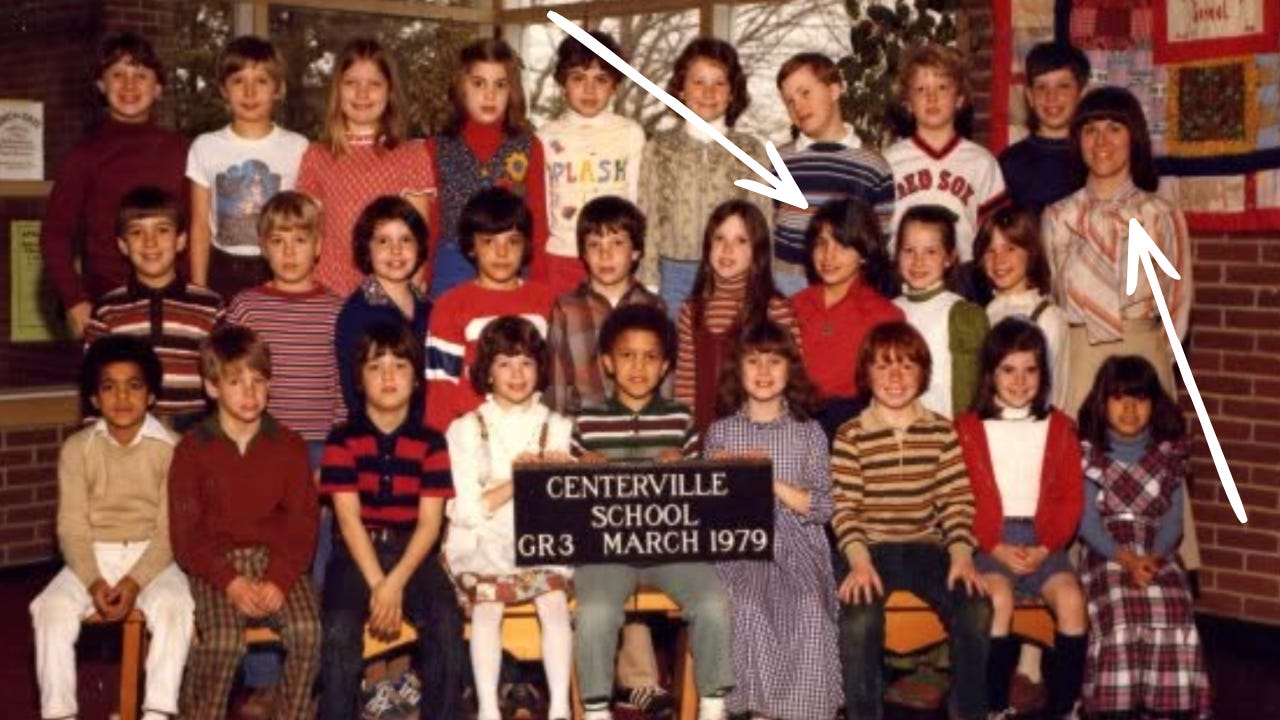
My third-grade class, with arrows pointing to me and Mrs. Greene.
What writing by hand offers is identity. It’s about what sets us apart.
Like our fingerprints, our handwriting says something about us. It reveals personality. Are your letters long and loopy? Tiny and crammed together? Perfectly straight? Slightly slanted?
How many people’s handwriting could you recognize today? Every letter I’ve ever saved tells two stories. One is the words themselves. The other is the handwriting they're written in.
I’d know my Nana Banana’s handwriting anywhere. Scratchy, uneven lines, a mix of print and cursive. Seeing her handwriting on old letters today, years after she passed, still makes me smile because those words were written just for me.
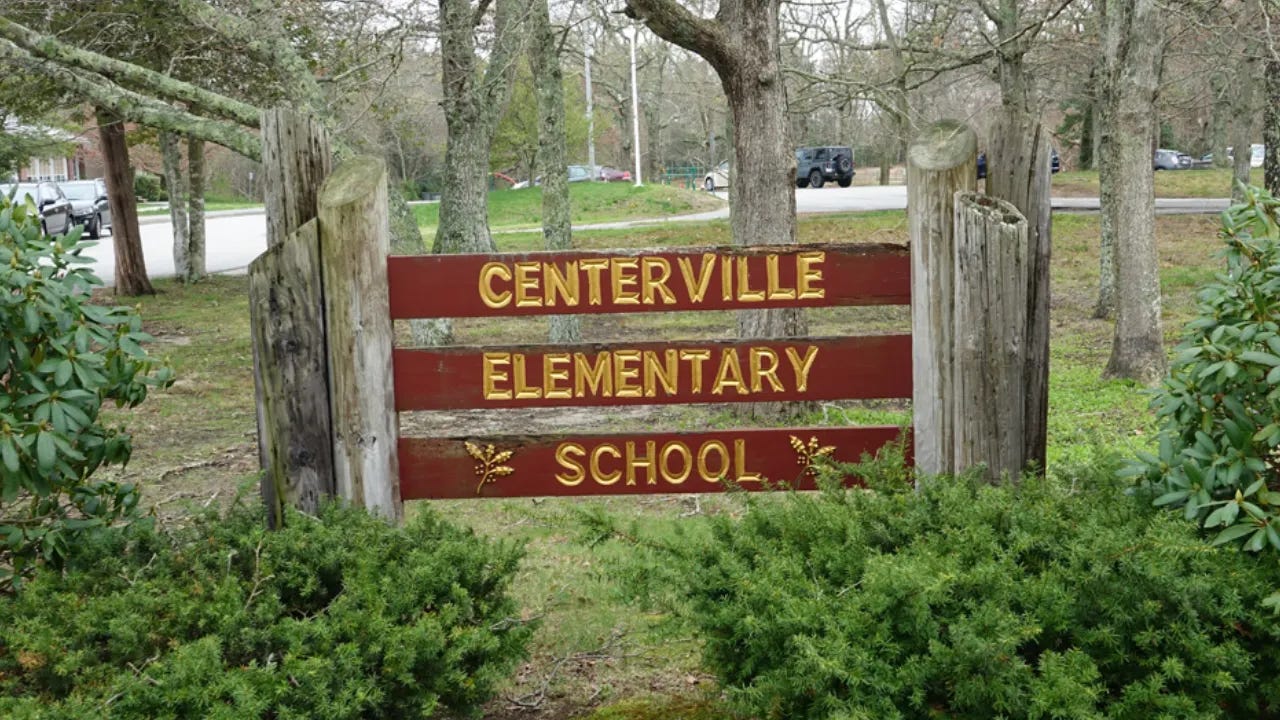
So, my third- and fifth-grade teachers, while you thought you were teaching penmanship, you were really teaching all of us how to connect and correspond with people, something I’ve been doing every day since.
This letter isn't exactly out of the blue: Mrs. Leach, you wrote me back when I wrote to you during my 365-day letter project last year, and Mrs. Greene, I still smile biking past your old house thinking of your "Oh I Say" poem, which I’ve repeated to my nieces and nephew ad nauseam.
Learning to write is like learning to cook. It’s a skill you carry with you forever. I certainly did. I’ve used cursive almost every day since to take notes in class, write letters, keep journals, and pen first drafts of books. I've signed my name hundreds, maybe thousands, of times inside the front covers of those books. All because the two of you taught me how to put pen to paper. That one simple skill led to my life’s work.
How many people can thank someone from their childhood for as important a reason as that?
With schools committing to teach cursive again, they’re not simply teaching an alternative to writing, they’re giving students another way to express themselves, another way to leave behind something uniquely theirs.
As I’ve been rereading decades of letters for my new memoir, I’ve realized maybe it’s not the letters I’m preserving, but the handwriting inside them. Imprints of the past.
Thank you again for teaching me something that has shaped my life in ways none of us could have imagined.
With love (and still the urge to talk when I’m supposed to be quiet),

P.S. Is there a teacher or mentor from your past you never quite got around to thanking? Tell me who, and why, in the comments.
SONG OF THE WEEK
Dear Teachers by Malia Teano




Thank you, Karen!
I never before thought of learning to write legibly as teachers giving us the ability to connect and communicate with others, but I appreciate that lightbulb moment! It reminds me of all the park benches I’ve seen that say, “If you can read this, thank a teacher.” Great reminder, thanks!